

















Seth Rollins Opens Up On Mental Toll Of Fan Criticism And Social Media
Posted By: Ben Kerin on Nov 26, 2025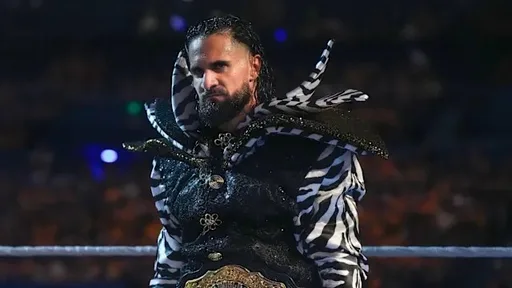
During a conversation with Bert Kreischer, Rollins opened up in a way that pulled back the curtain on the emotional strain that comes with performing in an era where every action is instantly judged, replayed, debated, and amplified. His comments painted a vivid picture of how today’s environment affects not only his career but the people closest to him.
Rollins explained that the feedback loop around wrestling has changed dramatically, and not always for the better. He noted that performers once had time to breathe before outside voices began weighing in, but today the reactions come flooding in instantly.
“It’s like a vicious cycle. In our business, it’s immediate. You do a thing, and then you get an immediate response right away because it’s live. It’s live. So immediately you get the live response from the audience feedback. But now you have this social media effect where you get the live response on social media, and then you get this retroactive response in the days following where everybody analyzes it and picks it apart, and there’s the hot takes, and then there’s hot takes on the hot takes. And then again, like you said, the algorithm, whatever gets traction is going to be usually negative or a hot take, and that gets amplified. And you see that, and you start to trick yourself into thinking, ‘Well, that’s the reality. That’s the reality that I live in.’”
Rollins went on to describe how the constant barrage of opinions, criticism, and negativity began to creep into parts of his life that should have been untouchable. At a time when he was already battling creative frustrations, the online noise only intensified everything he was feeling.
“And when you’re already feeling bad about yourself or bad about what you’re doing from a creative standpoint, and then you have that on top, you know, it just starts to pile on. And you start to really feel a certain way about what you’re doing. And I found that was really affecting my personal life. Like, it was affecting my relationship… It started to affect my decisions in my relationship and the way I was interacting with her. And it was really, really messing everything up. And I had to take a moment of full collapse to come back and be like, ‘What am I doing? Let’s get this under control.’ So I did.”
Rollins also addressed the current culture of online commentary, noting that the overwhelming volume of takes, opinions, and performative outrage has created a difficult landscape for performers and fans alike.
“The fact that everybody feels like they need to have a fcking opinion about everything, you know, that’s a thing where I go, ‘Well, what are we doing here?’ No one needs you. You don’t need to have an opinion. You can just say nothing. You can just say nothing, or you can talk to your friend about how much you hated the latest Marvel movie. You don’t need to put that crap on social media. You don’t need to. Nobody gives a sht about you and your opinion, you know.”
He acknowledged that the wrestling world has, at times, empowered fans to influence decisions, which can be both a blessing and a challenge. Rollins highlighted a recent example involving R Truth to illustrate how opinions can sway major calls behind the scenes.
“Look, to their defense, these opinion junkies, we’ve given them a little bit of the liberty of saying, ‘If you have a strong enough opinion and it takes hold enough, we will change course.’ And that happens from time to time. That’s the beautiful thing about our business, partially, is that you can pivot when things are wrong. A good example of this is, I would say there are a couple of them. One was the recent R Truth situation where R Truth’s contract didn’t get negotiated and it got leaked online that he had been released. And the fans went, ‘What the, ? We love R Truth. What are we doing here? We need R Truth. Everybody needs an R Truth.’ And it got to the point where the executives in WWE said, ‘You know what? They’re right. We do need R Truth. We were wrong.’”
⚡ Explore WNS





Popular Tags
Join WNS Discord

Donate to WNS

⚡ Events